
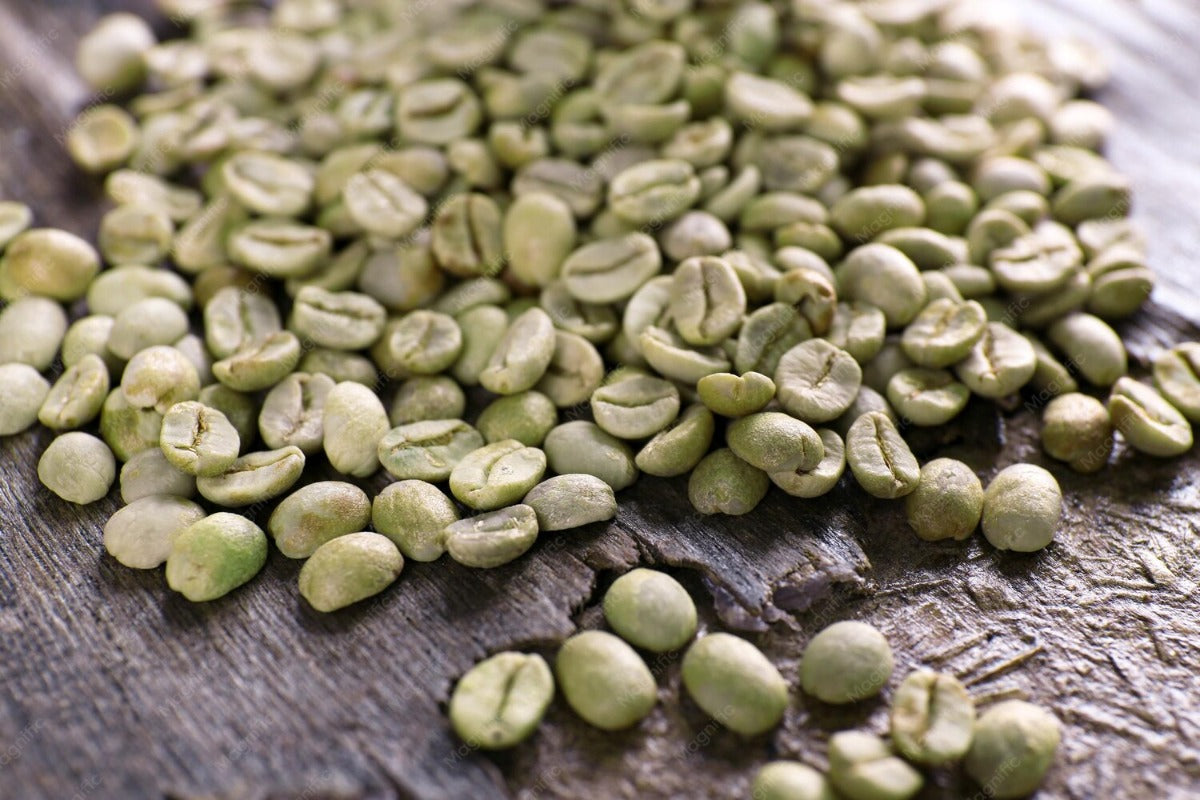
Key Takeaways:
-
SCA specialty grade: zero Category 1, maximum five Category 2 defects per 350 g.
-
ICO sets export moisture at 8–12.5%; 10–12% is the commercially reliable range.
-
Screen size and density shape roasting behavior but don’t define quality alone.
-
One good lot shows potential; consistent specs across shipments prove supply reliability.
-
CBB’s Singaraja Dry Mill runs multi-checkpoint QC across its Arabica and Robusta portfolio.
Under the SCA Green Coffee Classification System, a 350g Arabica sample must contain zero Category 1 defects and no more than five Category 2 defects to qualify as specialty grade (SCA, 2004/2013). That benchmark shows that “high quality” is not merely a marketing phrase, but rather an objective standard that can be assessed based on measurable physical and stability criteria. Factors such as moisture content, physical characteristics, processing consistency, and defect control are universally critical to evaluating green coffee quality. However, the SCA’s quality thresholds are specific for Arabica, since Robusta is assessed under its own grading systems. All of these quality parameters can be rigorously assessed, tested, and controlled prior to export with the CBB Dry Mill facility in Singaraja. It serves as the primary operational unit for maintaining consistent quality for the commodity.
The Measurable Pillars of High-Quality Green Coffee
Defect Classification: The Arabica Specialty-Grade Gate

The Washed Arabica Green Coffee Defect Poster. Source: Specialty Coffee Association
The SCA framework uses two-tier defect system:
-
Category 1 defects include full black beans, full sour beans, foreign matter, and severe insect damage.
-
Category 2 defects include partial black or sour beans, broken beans, minor insect damage, and immature beans.
The specialty threshold is zero Category 1 and no more than five Category 2 defects per 350g (SCA, 2004/2013). For buyers, this gives an objective way to evaluate Arabica instead of relying on appearance or cupping impressions alone. Other frameworks exist, including Indonesian SNI classifications and commercial grading systems, which are the relevant references for Robusta. The SCA threshold is the Arabica-specific benchmark within a wider landscape of grading systems, rather than a universal definition of green coffee quality across all species.
Moisture Content and Water Activity: The Stability Gate
The ICO states that export green coffee should hold 8.0 to 12.5% moisture, with 10 to 12% treated as the commercially reliable range (ICO, 2021). Moisture is the quality parameter relevant across coffee species, including Arabica and Robusta. This makes it one of the most universal benchmarks in the trade.
Moisture connects directly to water activity, storage stability, and mold risk. Excessive moisture can create storage and quality risks, while excessive drying can also affect coffee quality and stability.Therefore, it is important to conduct precise moisture measurements rather than estimating quality based on a bean’s appearance.
Physical Integrity: Screen Size and Density
Screen size uniformity and bean density influence handling and roasting behavior. Mixed sizes can heat unevenly in the roaster, which makes profiles harder to repeat. This is why physical grading is applied across coffee types according to the buyer’s specification and target market. However, screen size is not, by itself, a definition of “high quality.” It is one measurable specification used alongside defects, moisture, processing, and sensory evaluation.
Why One Good Lot Is Not the Same as a Reliable Supplier

Source: Magnific
Buyers are not purchasing one impressive sample. They are purchasing a supplier’s ability to deliver coffee that stays within agreed specifications across shipments. This consistency is crucial in long-term import contracts and commercial roasting to maintain a stable roast profile and avoid financial losses due to quality deviations.
It is important to know that peak quality and repeatable quality are different things. One exceptional lot demonstrates potential, while consistent specifications demonstrate reliability. Therefore, quality documentation and standardized QC systems become vital tools for reducing uncertainty in procurement.
Inside CBB Dry Mill Coffee Processing in Singaraja

CBB Dry Mill Coffee Processing in Singaraja. Source: CBB
Quality Control Starts Before Export
Quality Control (QC) begins with incoming coffee selection and post-harvest handling. All post-harvest stages are precisely controlled, with gradual processing and drying required to maintain an ideal moisture content of 10 to 12% to prevent mold. Final hulling and sorting are designed to protect the beans’ physical integrity from breakage and eliminate any remaining defects. These standardized procedures serve as a universal foundation that ensures the cleanliness and uniformity of the entire coffee portfolio.
Multi-Checkpoint Verification
CBB’s QC is a sequence of complementary checks:
-
Physical inspection
-
Moisture testing
-
Water activity assessment where applicable
-
Screen-size and density grading
-
Defect sorting
-
Cupping evaluation
The applicable standard depends on the coffee. For Arabica lots, SCA specialty-grade criteria come into play where relevant; for Robusta and other commercial specifications, CBB applies the grading and buyer specification suited to that coffee.
Infrastructure as Quality Control
CBB’s Dry Mill facility provides standardized drying, handling, grading, and sorting systems to reduce lot-to-lot variation. This infrastructure supports the ability to hold agreed specifications from processing through shipment.
Conclusion
High-quality green coffee should be judged by measurable, relevant specifications rather than descriptive claims. SCA specialty-grade defect criteria serve as the Arabica benchmark, while moisture, physical grading, and processing consistency are broader measures applied according to the standard for each coffee type. A supplier’s value lies in maintaining agreed specifications across repeated shipments, and CBB’s Singaraja facility and QC processes are built to support that across its Arabica and Robusta portfolio.
Looking for Indonesian green coffee backed by measurable quality standards and structured quality control? Connect with the Coffee Beyond Borders team through our Contact Form or WhatsApp to review available Arabica and Robusta coffees, quality specifications, and Singaraja processing infrastructure.
References
Barista Hustle. (2022, June 16). RS 2.02 moisture content. https://www.baristahustle.com/lesson/rs-2-02-moisture-content/
Espresso Academy. (2025, October 9). Green coffee defects: Complete guide with examples and SCA table. https://espressoacademy.it/en/guide-en/green-coffee-defects-complete-guide-with-examples-and-sca-table/
Food and Agriculture Organization of the United Nations. (n.d.). Annex 7: Green coffee classification and grading. https://www.fao.org/4/x6939e/x6939e13.htm
International Coffee Organization. (2004, May 21). Coffee Quality-Improvement Programme – Modifications (ICC Resolution No. 420). https://www.ico.org/documents/iccres420e.pdf
International Organization for Standardization. (1995). Green and roasted coffee — Determination of free-flow bulk density of whole beans (Routine method) (ISO Standard No. 6669:1995).
Pashley, T. (2017, August 29). Roaster guide: Why is green bean moisture content important? Perfect Daily Grind. https://perfectdailygrind.com/2017/08/roaster-guide-why-is-green-bean-moisture-content-important/
Specialty Coffee Association of America. (2004). Arabica green coffee defect handbook.
Bagikan:
How to Roast Coffee Beans Consistently: Why Green Bean Quality Matters
Coffee Processing Beyond Fermentation: How Infrastructure Protects Export-Grade Coffee Quality