
Key takeaways:
-
No single source gives buyers the full picture of Indonesian green coffee sourcing.
-
World of Coffee Jakarta 2025 drew 15,000+ visitors, the first in a producing country.
-
Jakarta Coffee Week shows how global trends take shape within Indonesia’s coffee community.
-
CQI Q Processing gives buyers a technical language for comparing fermentation and drying.
-
The SCA Q Grader Course builds shared sensory vocabulary, not a universal grading system.
-
The real value comes from applying this knowledge in sourcing conversations and lot evaluation.
In green coffee sourcing, no single source gives a buyer the complete picture. Market reports and supplier conversations are important, but they show only one part of it. Industry events, technical education and professional training add the rest.
This article looks at four of these touchpoints: World of Coffee, Jakarta Coffee Week, CQI Q Processing and the SCA Q Grader Course. Each has a different role in the coffee ecosystem. For importers who source from Indonesia, understanding these roles helps to read the market with more context. At Coffee Beyond Borders (CBB), we continue to build our knowledge through this wider ecosystem.
World of Coffee: The Global Perspective
World of Coffee is the international trade show of the Specialty Coffee Association (SCA). The 2025 edition took place on 15–17 May at the Jakarta Convention Center (JCC), and it was the first time the event was in a coffee-producing nation. More than 15,000 visitors from 70 countries attended, and over 400 exhibitors were featured globally.
The event also hosted the 2025 World Brewers Cup, highlighting craftsmanship of manual filter coffee brewing. Aside from the prestigious international competition, there’s an exclusive feature in Jakarta that provided a dedicated space for local governments to showcase regional Indonesian specialty coffees in Nusantara Pavilion.
Farmers Village featured a spotlight on the originators of the crop, with 35 to 40 Indonesian coffee farmers participating in the area.
For importers, the exhibition floor is only one part of the value. The conversations around it are equally useful: what roasters ask for, which flavor profiles receive attention, and how different markets define quality. These exchanges give a view beyond one origin or one customer.
This view is also useful for a sourcing partner. When we understand what international buyers expect, we can connect those expectations to our Indonesian sourcing work in a more practical way. The next edition will take place in Dubai in January 2027.
Jakarta Coffee Week: The Indonesian Perspective
Where World of Coffee is global, Jakarta Coffee Week is local. It will take place on 4–6 December 2026 at the Indonesia Convention Exhibition (ICE) BSD (Indonesia Travel). The event shows what the Indonesian coffee community is working on now: new products, processing experiments and the professionals behind them.
A global trend does not always develop in the same way in every country. In Indonesia, local taste, climate and processing habits can change how a trend appears. International buyers who understand this context can interpret an origin more accurately and ask better questions. This is also the context we consider when we discuss Indonesian coffees with our buyers.
CQI Q Processing: Understanding What Happens After Harvest
A green coffee does not arrive in the warehouse in the same condition as it left the farm. Between the harvested cherry and the export-ready bean, there are several decisions about fermentation, drying and processing. Each decision influences the final physical and sensory result.
The Coffee Quality Institute (CQI) teaches this subject through its Q Processing program. The program is organized in levels, from an introduction, to Generalist and Professional, and finally to Expert. Buyers do not need these certificates themselves. The program is useful because it creates a common technical language. When a supplier describes a natural lot or an anaerobic lot, a buyer with basic knowledge of processing can compare the lots more carefully and ask more precise questions.

Preparation of a pressurized tank for controlled coffee fermentation. Source: Coffee Beyond Borders
CBB itself had already completed the Q Processing Course several times with Johan Kwe, who is known as one of the Q Processing experts and instructors.
SCA Q Grader Course: A Shared Language for Quality
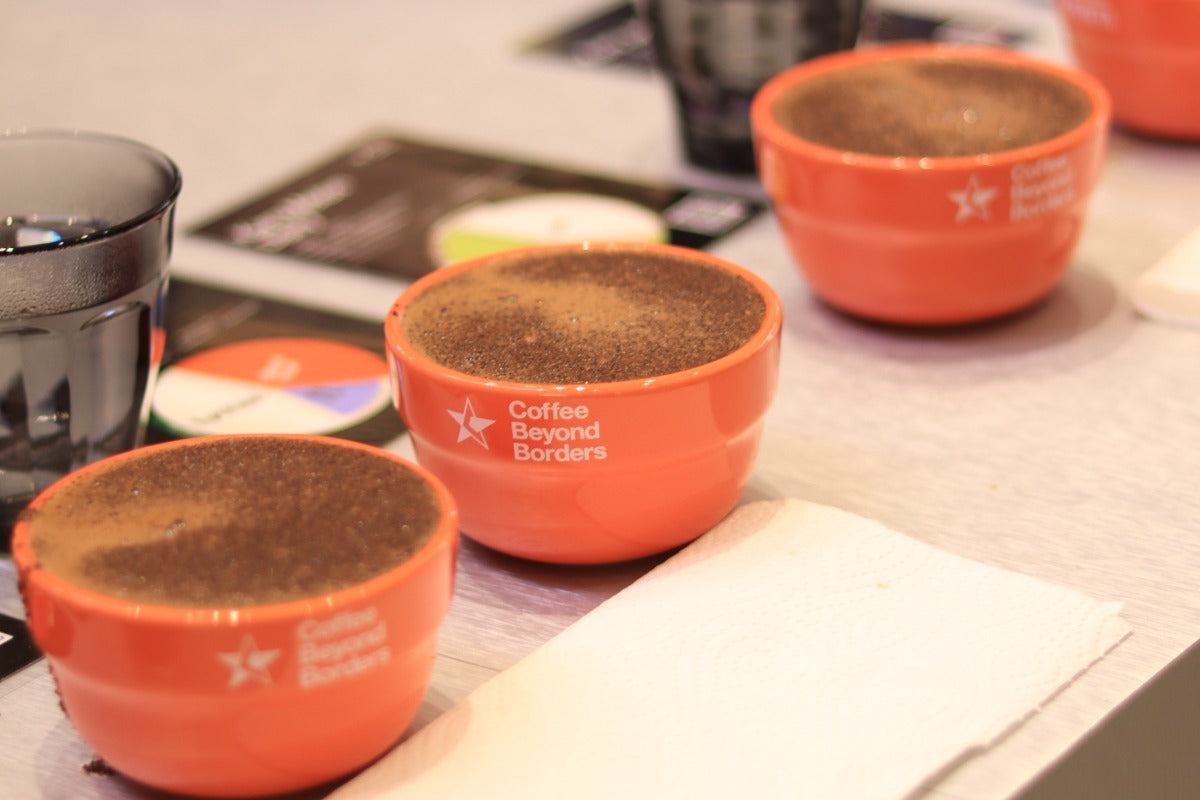
After processing, someone must evaluate and describe the coffee. The SCA Q Grader Course trains professionals to do this in a structured and consistent way. The SCA now manages the program, and it follows the Association’s newer approach to assessing coffee value, the Coffee Value Assessment.
The scope of the course should be clear. It is professional training for evaluation skills, not a universal grading system for all coffee, and finishing the course does not automatically produce better sourcing decisions. Its main value is communication. When producers, exporters, importers and roasters use similar sensory vocabulary, comparing lots becomes easier and misunderstandings become less frequent.
Connecting the Four Touchpoints
|
Touchpoint |
Main relevance |
|
World of Coffee |
Global industry and market view |
|
Jakarta Coffee Week |
Indonesian market and ecosystem |
|
CQI Q Processing |
Technical processing knowledge |
|
SCA Q Grader Course |
Professional evaluation skills |
Together, they follow the path of the coffee itself: global market, local origin, processing and quality evaluation. The value does not come from attending an event or completing a course. It comes from applying the knowledge in practice: sourcing conversations, lot evaluation, processing decisions, quality control and buyer requirements. This is how CBB approaches its work, as a sourcing partner that links market awareness with knowledge of origin, processing and quality.
What This Means for Buyers
Each platform gives a different type of insight: market direction, Indonesian context, processing understanding and a common way to discuss quality. When a buyer combines them, evaluating a supplier or a lot becomes less dependent on the origin name or the product description alone.
Conclusion
Specialty coffee knowledge does not come from one annual event. It comes from several parts of the industry: a global exhibition, a local gathering, a processing program and a sensory training course. Buyers who consider all of them are usually better prepared for sourcing decisions. CBB aims to be a sourcing partner that keeps learning and connects the expectations of international buyers with Indonesian coffee expertise.
Looking for Indonesian green coffee with sourcing, processing and quality knowledge behind it? Connect with the Coffee Beyond Borders team through our Contact Form or WhatsApp to discuss your sourcing requirements.
References
Coffee Quality Institute. (n.d.). Course progression. https://coffeeinstitute.org/education/course-progression
Indonesia Travel. (n.d.). Jakarta Coffee Week. https://www.indonesia.travel/gb/en/events/event-detail/jakarta-coffee-week
Specialty Coffee Association. (n.d.-a). World of Coffee Brussels 2026 announced. World of Coffee Europe. https://europe.worldofcoffee.org/blog/world-of-coffee-brussels-2026-announced
Specialty Coffee Association. (n.d.-b). Latest news. World of Coffee Europe. https://europe.worldofcoffee.org/latest-news
Specialty Coffee Association. (n.d.-c). The SCA officially adopts CVA Descriptive and Affective assessments as new cupping standards. https://sca.coffee/sca-news/sca-new-cva-cupping-standards
Share:
Single Origin Coffee: Regional Diversification Across Indonesia and Its Support to Supply Stability