Key Takeaways
- Price cannot be the only basis for deciding coffee supply sources.
- Indonesia offers multiple coffee origins that include Sumatra, Java, Bali, and Flores.
- Each of these regions have distinct flavor profiles and harvest windows.
- When sourcing Indonesian coffee, it is encouraged to implement origin diversification within the country.
- Logistics and regulations factor into supplier assessment.
- Specifications must go beyond a generic “Indonesian coffee” label.
- A quality origin requires the right partner that can transform an origin’s potential into a consistent supply.
Asian coffee buyers are currently facing a highly dynamic market environment where global prices remain volatile. Not only that, other factors such as freight, weather, currency movements, and regulatory requirements also impact landed costs and supply availability. The ICO Composite Indicator (I-CIP) serves as a prime example. The I-CIP moved from 231.96 US cents/lb on 9 June to 272.39 US cents/lb by the end of the month (International Coffee Organization, 2026b). Such circumstances prove that price cannot be the only criterion when determining supply sources.
One relevant approach to this issue is origin diversification. With multiple supply sources, buyers can have a number of options when faced with changes in production, prices, weather conditions, or logistics. For Asian buyers, this approach gives an opportunity to consider Indonesian coffee sourcing. Indonesia is not merely another imported coffee origin, but a supply source with multiple origins, processing capabilities, harvest windows, and coffee profiles.
As a partner, Coffee Beyond Borders (CBB) can connect buyers with Indonesian coffee supply, infrastructure, and origin knowledge. The question is no longer simply where to import coffee from, but which origins can support a resilient and commercially viable sourcing strategy.
Why Indonesian Coffee Deserves a Better Look
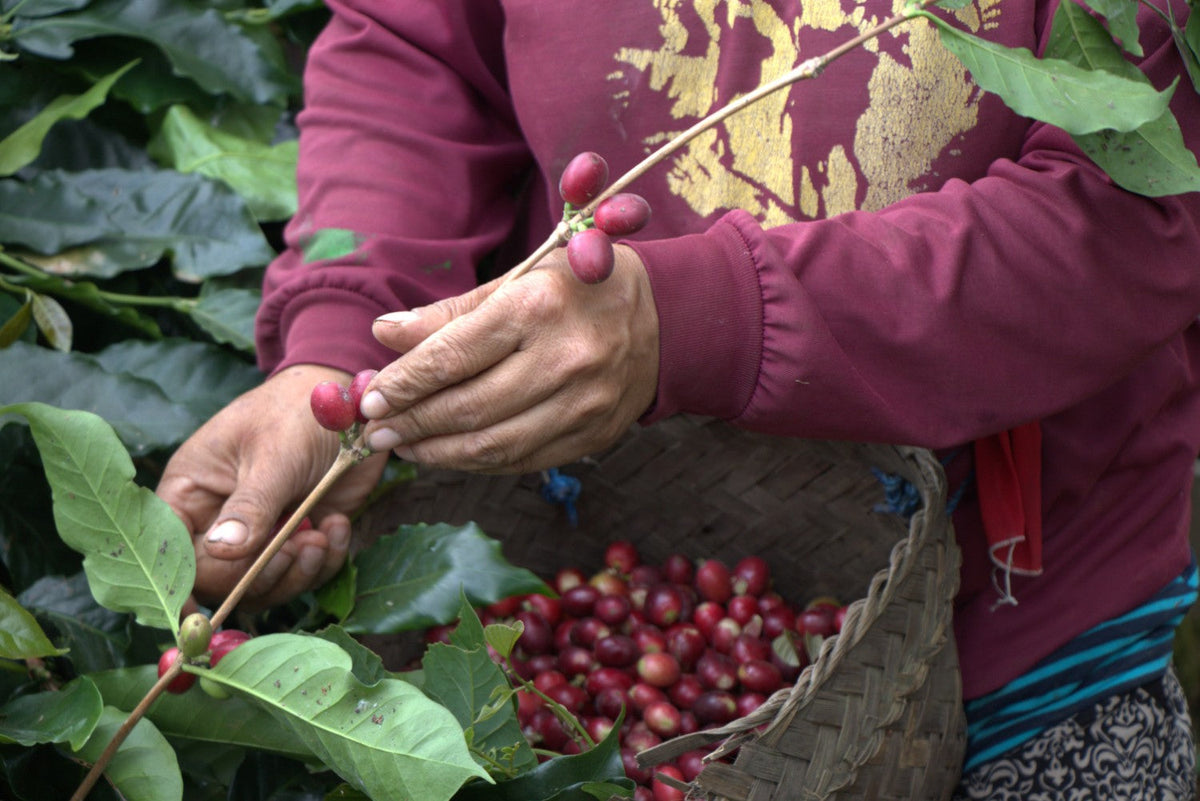
Indonesia is one of the most diverse coffee origins in the world. Coffee production is carried out across the islands with distinct climate, altitude, varieties, and post-harvest practices. These differences contribute to distinct coffee characteristics. For example, Sumatra’s wet-hulled processing tradition and low-acidity, full-bodied profile, Java’s more balanced and cleaner cup, Bali’s washed-process, citrus-forward Kintamani coffee, and Flores’s sweeter, floral character (Royal Coffee, n.d.). Indonesia’s geographic diversity allows buyers to evaluate multiple origins according to flavor requirements, availability, harvest timing, and commercial needs.
Indonesia does not necessarily follow an identical harvest calendar due to its unique geography. Indonesia is a vast country that stretches across the equator over thousands of islands. This unique geographical factor creates microclimate variations, rainfall patterns (monsoonal and equatorial), and differences in location north and south of the equator. Therefore, coffee flowering and fruit ripening cycles differ between regions.
Understanding regional harvest calendars is important for buyers planning annual procurement. Indonesia, as a multi-origin sourcing, offers a way to build a more flexible purchasing calendar rather than relying heavily on one region or one harvest period.
The Indonesian coffee industry is often celebrated for its exotic specialty coffee. However, its commercial reality is far broader and more versatile. This multi-tiered origin is capable of meeting the entire spectrum of global commercial demands. Indonesian coffee offers everything from highly scalable commercial grades to distinct, micro-lot specialty coffee. This allows international buyers to easily balance high-volume value lines and premium specialty items within a single origin.
The Global Procurement Challenges Make Origin Strategy More Important
Global coffee price fluctuations are highly dynamic and often cannot be anticipated by linear planning. The movement of the ICO Composite Indicator Price (I-CIP) over the 12-month period from July 2025 to June 2026 shows this high level of volatility. For instance, reports from the International Coffee Organization (ICO) show a sharp spike in intra-month volatility; in June 2026, prices briefly hit a two-year low before abruptly reversing course and surging by 17.4% by month’s end, driven by extreme weather sentiment. In addition, international coffee buyers operate within a market ecosystem that is highly sensitive to factors such as weather, production forecasts, currency movements, and global demand. Therefore, procurement teams cannot rely only on current spot prices due to its volatility.
Weather risks can impact origin-level availability as shown by Indonesia’s 2026/27 outlook. USDA FAS forecasts Indonesian green coffee production to decline 8% to 11.38 million 60-kg bags, with exports projected to fall 11% to 7 million bags (USDA FAS, 2026). This is due to excessive rainfall affecting flowering and fruit development in Southern Sumatra and Java. Such circumstances illustrates how quickly conditions can change even within an established producing origin. However, this localized climate disruption is not an argument fo avoiding Indonesian coffee. Instead, this reinforces the urgency for buyers to implement a multi-origin sourcin strategy within Indonesia. For example, shifting volumes to northern Sumatra, Sulawesi, or Flores to maintain supply stability throughout the year.
Geopolitical events and disruption of global shipping routes now play a crucial role in determining landed costs. The major disruption in the Strait of Hormuz in early 2026 served as stark evidence of how global supply chains can be disrupted in an instant. According to ICO’s report, the closure on 4 March 2026 sent energy costs and shipping freight sharply higher before markets began to absorb the shock (International Coffee Organization, 2026a).
Facing these vulnerabilities, procurement teams need comprehensive visibility into shipping schedules, port access, lead times, and precise logistics coordination. In this context, Indonesia offers a major strategic advantage. Indonesia’s export infrastructure already serves multiple Asian and global routes, with major coffee shipments moving through ports such as Jakarta, Panjang (Lampung), Belawan, and Surabaya (MSC, n.d.; MSC, 2024), and via intra-Asia and Middle East corridors such as Semarang to Jebel Ali (a. hartrodt, 2024). This existing infrastructure is a relevant factor when evaluating landed cost and supply reliability for Asian buyers.
Regulation is now becoming a part of supplier selection. One of the examples is The European Union Deforestation-free Regulation (EUDR). The EUDR is a clear example of how traceability and supply chain documentation are no longer just added value, but increasingly crucial requirements for international coffee buyers. This regulation requires that all coffee entering the European Union market be deforestation-free and traceable back to the point of production. Based on the latest updates, the implementation schedule for EUDR compliance is as follows:
- 30 December 2026: Compliance deadline for large and medium-sized operators and traders.
- 30 June 2027: Compliance deadline for micro and small operators (European Commission, 2026).
Given this deadline, companies should begin integrating traceability into their supplier selection process early on. Making traceability a key criterion in selecting business partners is far more strategic than simply considering it a last-minute compliance measure. Building a robust documentation system takes time, so suppliers’ readiness to provide geolocation data and proof of land legality should be evaluated early on.
What to Look for When Sourcing Indonesian Coffee
The label “Indonesian coffee” is insufficient as a procurement specification. This is because the country’s vast geographic scale results in many variations in the commodity. To align supply with the buyer’s target market, specifications must capture details of the growing region/plantation and altitude, which determine terroir, the plant variety, and the harvest period to ensure bean freshness. Furthermore, post-harvest methods (such as washed or wet hulling) must be specifically defined, as they determine the final flavor characteristics of the brew. Mastery of these origin aspects serves as a commercial filter to mitigate the risk of mispurchasing and ensure the consistency of the product entering the buyer’s supply chain.
Processing facilities are crucial for maintaining post-harvest quality and addressing buyer concerns about inter-shipment consistency. Mechanical standardization ensures consistent processing and maintains uniform moisture levels within safe limits to prevent mold. The physical quality of the beans is strictly protected through physical sorting and defect control, then validated through quality control procedures. Supported by controlled storage and inventory management, this infrastructure ensures buyers receive a uniform coffee profile with every shipment.
Whether you are new or already familiar with Indonesian coffee, traceability is another thing buyers should look for. Traceability is now crucial to ensure long-term procurement transparency and comply with evolving global regulatory requirements. Buyers must understand the coffee’s track record, from the farmer’s farm to the processing facility, and through to export, to secure direct trade relationships. Furthermore, compliance with upstream-to-downstream traceability data is essential for penetrating international markets and complying with stringent regulations such as the European Union Deforestation-free Regulation (EUDR).
Capacity and sustainability of supply require buyers to shift their focus from one-off purchases to suppliers’ ability to support multiple annual procurement cycles. Reliable suppliers must have accurate production planning, inventory visibility, and harvest forecasts to create timely delivery schedules that adapt to climate challenges. Aligning buyer volume needs with realistic supply capacity at the source level is crucial to prevent contract failures and to avoid the practice of illegal coffee blending to meet quotas.
Building a Multi-Origin Indonesian Coffee Sourcing Strategy
When sourcing Indonesian coffee, it is important to keep in mind that relying on one origin can still create risk. This is due to the vulnerability to local weather anomalies as shown by the 2026/27 Indonesian production forecast. The USDA FAS forecasts Indonesian green coffee production to decline 8% to 11.38 million 60-kg bags, with exports projected to fall 11% to 7 million bags (USDA FAS, 2026). This decline is primarily caused by excessive rainfall during the flowering and fruit development phase in Southern Sumatra and Java. Therefore, buyers are encouraged to implement origin diversification within Indonesia as well as other countries.
As part of a broader portfolio strategy, Indonesia offers a diversity of geographic and sensory characteristics from four key regions:
- Sumatra: Major producing area with established international recognition, known for its wet-hulled processing tradition and low-acidity, full-bodied cup (Royal Coffee, n.d.). This region is relevant for buyers seeking distinctive Indonesian profiles and established commercial supply.
- Java: Important producing region with its own harvest and production characteristics, generally offering a more balanced, cleaner cup than Sumatra. Java can be an option to complement sourcing from other Indonesian origins.
- Bali: Distinct origin identity, typically washed-processed with a brighter, citrus-forward profile centered on the Kintamani highlands. This can be useful for buyers seeking origin differentiation.
- Flores: This region offers another regional sourcing option within Indonesia, with a sweeter, floral character and balanced acidity. It adds geographic diversity to an Indonesian sourcing portfolio.
When formulating a procurement strategy, try to shift the focus from “which coffee tastes best?” to “which origin fits the procurement requirement?” The following is procurement factors to consider:
| Procurement Factor | Why It Matters |
| Cup profile | Matches product and consumer positioning |
| Harvest timing | Supports annual purchasing plans |
| Available volume | Determines scalability |
| Processing method | Influences quality and consistency |
| Traceability | Supports transparency and compliance |
| Logistics | Influences lead time and landed cost |
| Quality control | Reduces shipment-to-shipment variation |
From Indonesian Origin to Reliable Green Coffee Supply
In a dynamic coffee market, uncertainty is the biggest challenge to your business’s sustainability. Coffee Beyond Borders (CBB) positions itself as your market intelligence partner at the forefront. We actively monitor and analyze every local and global factor affecting Indonesian coffee procurement. We equip you with real-time data and insights that include:
- Global coffee price movements: Analysis of macro trends and their impact on local prices.
- Indonesian production forecasts: Volume estimates based on weather conditions and agricultural trends.
- Harvest conditions: Direct monitoring of quality and quantity fluctuations at the farmer level.
-
Shipping developments: Updates on land logistics status and port readiness.
Regulatory changes: Early mitigation of new export-import and certification policies.
By leveraging CBB intelligence, you can shift from a reactive procurement strategy to a proactive and planned one. You can secure supply contracts early when prices are optimal, create precise roasting schedules, and minimize supply chain risks before disruptions occur in the field.
As a partner, CBB offers both processing capabilities and Quality Control (QC) standards. With modern processing infrastructure, origin-level coffee can turn into into consistent export-ready green coffee. This infrastructure is integrated with strict QC standards that include physical defect analysis and international standard cupping. This consistent quality over time directly builds global buyer confidence, eliminates the risk of cargo rejection, and is a key factor in securing repeat orders and long-term business contracts.
CBB is also capable of working with different purchasing requirements, including smaller and larger commercial volumes. CBB offers flexibility around origin selection, processing methods, quality specifications, volume, harvest timing, and shipment planning. This flexibility is crucial for buyers in Asia, providing an agile logistics partner to support the rapid expansion and growth of their roasting and coffee businesses.
Share:
Sumatra Coffee Harvest Calendar: When to Source and Why Scale Isn’t the Whole Story